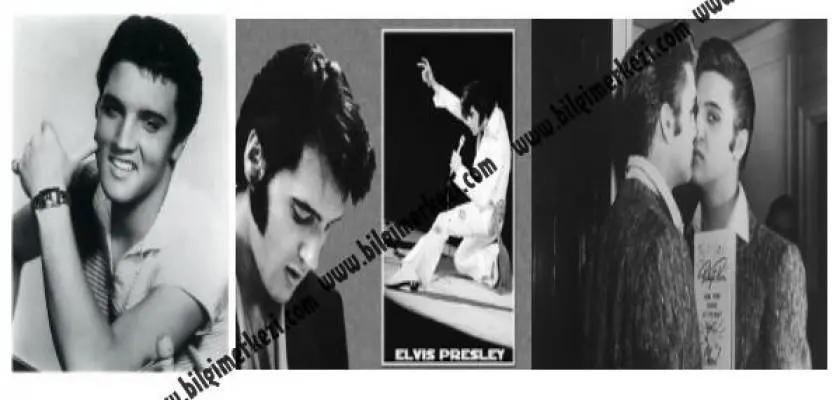
ELVIS PRESLEY - A Little Saint, A Little Devil
John Lennon once said, “There was nothing before Elvis.” We can say that Elvis was a constantly changing icon of the 20th century. He underwent an evolution throughout his life and became a symbol of success, excess, tragedy, and finally, decline. Even after his death, the many myths about him living on in some hidden, secret place stem from his ability to represent so many different things simultaneously.
Because while Elvis, on one hand, was a kind, shy man who went to Sun Records to make a recording to buy his grandmother a birthday present, and who was humble enough to say, “Hello, I’m Elvis Presley” even during his most popular periods, a man with developed religious feelings and a fondness for gospel; on the other hand, he had the image of a “rocker” who constantly pouted his lips, ready to indulge in all sorts of excesses. Despite all that is known about him after his death, his image, over the years, emerges as a darkening shadow, a myth with one part saint and the other part devil.
Elvis, who had a revolutionary impact on the cultural history of the 20th century, reflected the extreme contradictions within him in his music. While Presley penned some of the hardest songs in rock history, he also performed the softest ones.
In fact, Elvis’s embodying opposing characteristics illustrates a fundamental characteristic of popular culture. Every stance that positions itself against the system and becomes popular also embodies an image, and although this stance may seem anti-system, it fulfills the needs of the system. At the same time, it serves as a safety valve between the masses and the system.