Encoder
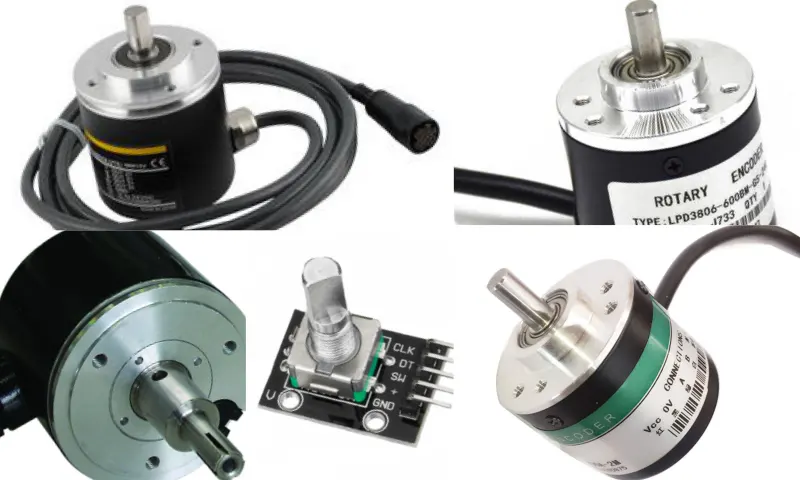
Absolute and Incremental Encoders
Encoder systems are used in different devices and with different technologies to generate signals. These signals are;
- magnetic,
- mechanical,
- resistive
- optical signals.
The most commonly used signal format is optical. Optical sensing transmits data by providing feedback based on light interruption. Encoder systems are categorized according to their shaft and connection types as;
- Hollow Shaft Encoder
- Shaft Encoder.
Furthermore, signal sensing is divided into two types within itself: magnetic and optical sensing. Position determination is divided into two types within itself: Absolute Encoder and Incremental Encoder.
Where are Encoders Used?
Absolute encoder: determines position by providing outputs, separated into digital bit sequences based on the rotating shaft, when power is supplied to the encoder. Even if the energy is cut off, the system remains in its last position and continues its operation from where it left off when reconnected to the power source. Incremental encoder: here, the rotating shaft continuously produces square wave signals, enabling counting by informing its current position. The difference between the two types of encoders stems from the absolute encoders appearing as position 0 from the moment energy is supplied and processing based on this value. Type 2 encoders are used in areas such as medical devices, packaging machines, leather processing machines, industrial robots, CNC machines, antenna production, and bottling machines. Encoders are used in industrial control operations, glass - marble - cement wood processing machines, textile, leather processing machines, crane bridge cranes press machines, printing - packaging machine tools, robots, measuring instruments, plotters, sheet metal operations, scales balances, antennas, telescopes, medical devices, door control devices, and similar design areas.